Short answer
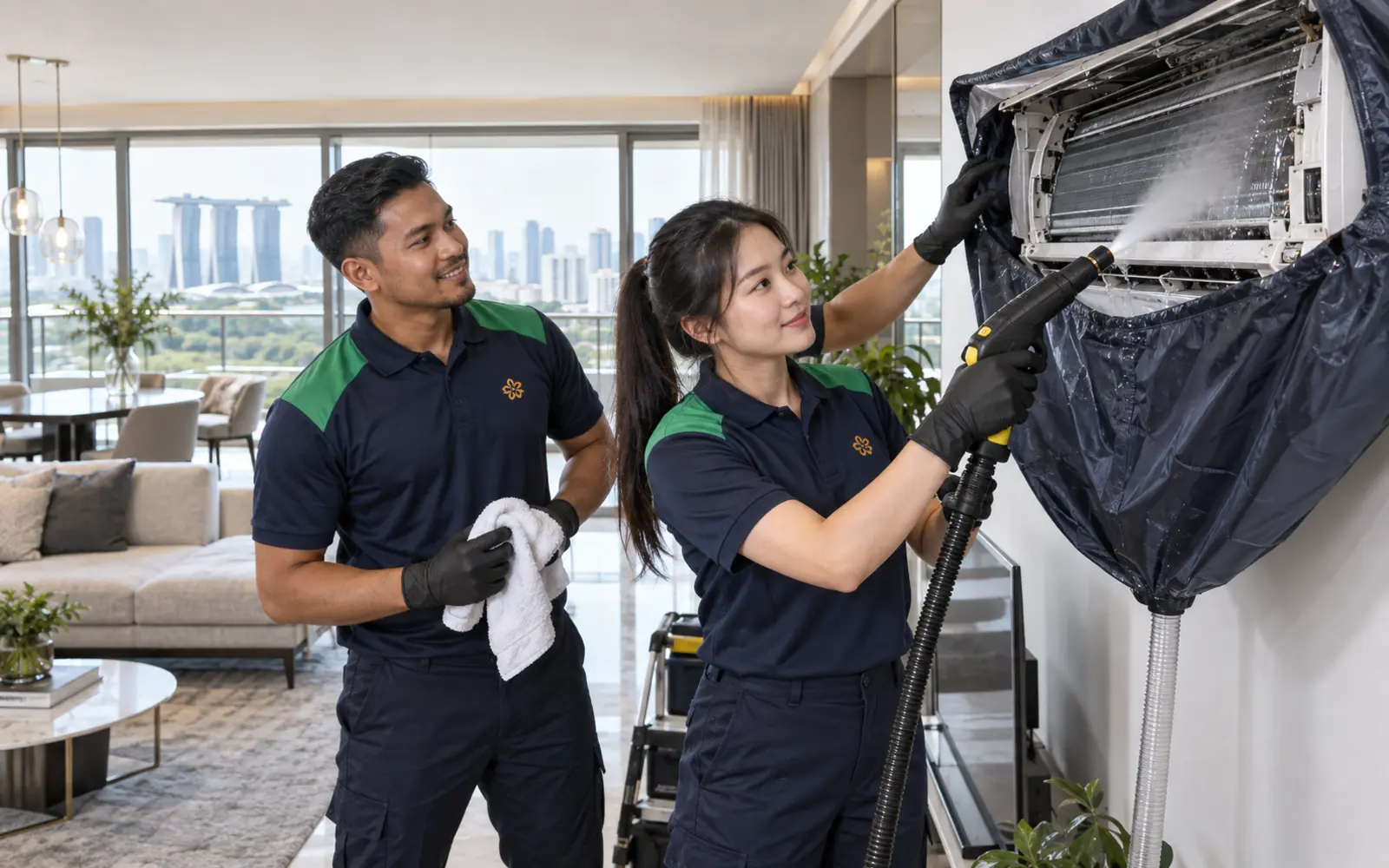
High-temperature steam aircon chemical cleaning combines suitable aircon-cleaning treatment, controlled steam and contained rinsing to loosen and remove stubborn buildup from accessible internal components. It goes beyond basic filter washing and surface cleaning.
High-temperature steam aircon chemical cleaning combines suitable aircon-cleaning treatment, controlled steam and contained rinsing to loosen and remove stubborn buildup from accessible internal components. It goes beyond basic filter washing and surface cleaning.
What the service is designed to clean
- Air filters and accessible casing
- Evaporator coil surface and fins
- Blower wheel and air outlet
- Drain pan and accessible condensate drainage
- Loose dust, oily residue and organic buildup in reachable areas
Our six-step process
- Check cooling, airflow, noise and drainage before work
- Protect the wall, floor and nearby furniture
- Remove filters and accessible components
- Apply suitable cleaning treatment to affected parts
- Use controlled high-temperature steam and contained rinsing
- Reassemble, test drainage and verify operation
Why combine chemical treatment and steam
- A suitable aircon-cleaning solution helps loosen greasy films, embedded dust and organic residue
- Controlled steam adds heat and reaches accessible fin gaps and crevices
- Contained rinsing carries loosened residue into the wash bag instead of the room
- Directly treated surfaces receive a hygiene-focused clean that can help reduce microbial contamination and odour sources
What customers may notice afterwards
- Cleaner accessible internal surfaces
- Reduced odour when accumulated dirt or organic residue is the source
- Improved airflow where buildup was restricting the unit
- More stable drainage after the drain pan and accessible line are cleared
Important limitations
- This is a hygiene-focused cleaning service, not medical sterilisation. Results depend on direct contact, temperature, time, soil level and component access. Cleaning cannot repair a failed compressor, refrigerant leak, damaged circuit board or worn mechanical part.